
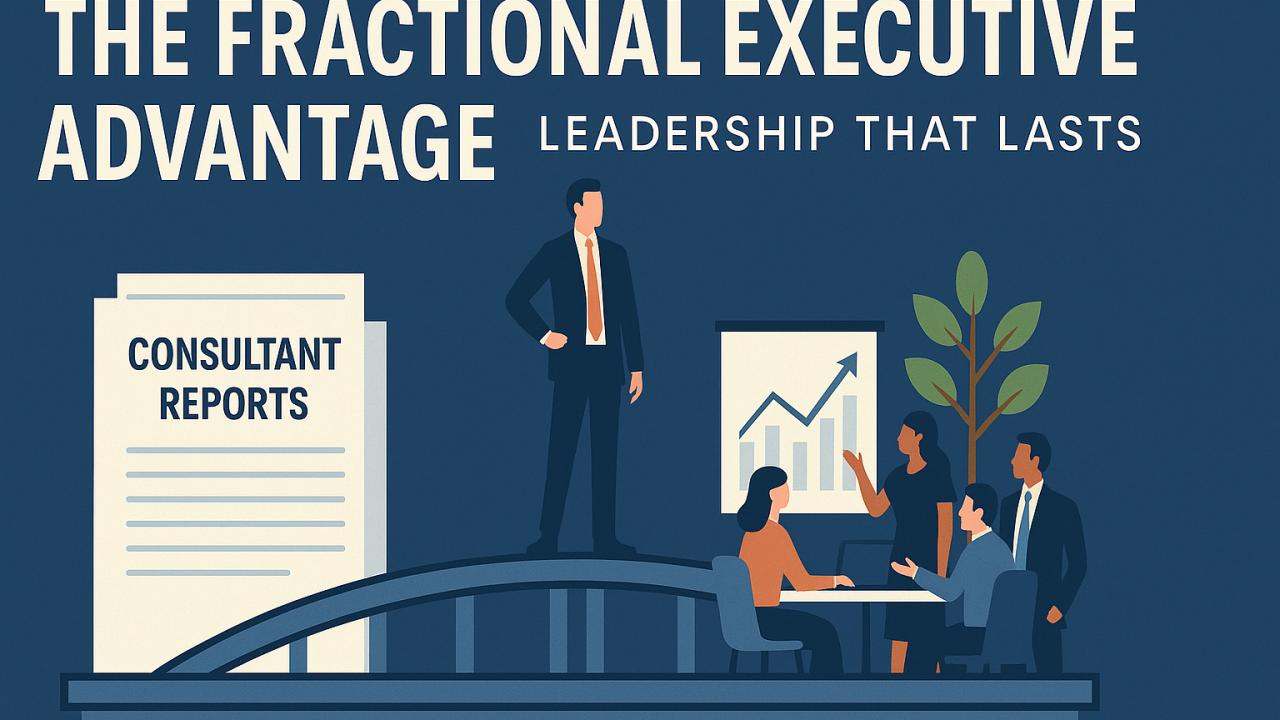
In both for-profit and nonprofit worlds, leaders are often torn between hiring full-time executives, engaging consultants, or trying to stretch existing staff to cover widening gaps. Each path has benefits, but many organizations are discovering that there’s a middle way: fractional executives.
Unlike traditional consultants, who provide recommendations but rarely integrate fully into daily operations, fractional executives step into your leadership team as a true extension of it. They bring executive-level expertise while remaining part-time and cost-efficient, bridging the gap between big vision and real-world execution.
I want to be clear here: I deeply respect many of my colleagues who consult with excellence. Their insights and strategies have guided organizations toward meaningful breakthroughs. But even the best consultants know their role is temporary, and sometimes their work is too detached from the ongoing rhythms of the organization. That’s where fractional leadership provides a different kind of value.
Why Fractional Executives Work
Fractional executives bring more than expertise, they bring alignment. Instead of hovering on the outside and offering advice from a distance, they step directly into leadership meetings, working shoulder to shoulder with the team to ensure strategy is shaped by the organization’s mission and values. This kind of presence grounds decisions in the culture and DNA of the ministry or business, protecting against flashy but ill-fitting solutions.
Equally important is how they integrate with existing teams. A good fractional leader doesn’t bypass staff or duplicate efforts; they listen first, honor what has already been built, and then look for ways to amplify those efforts. The result is a spirit of collaboration where teams feel supported rather than overshadowed.
And because they blend strategy with execution, fractional executives leave behind more than a binder of recommendations, they leave behind systems and structures that endure. Their impact isn’t measured only in quick wins, but in the sustainable change that continues to serve the organization long after their season of leadership has ended.
Protecting the CEO & Organization
Fractional executives also play a protective role for both the CEO and the organization. By taking ownership of specific functions, whether marketing, finance, operations, or innovation. they free the CEO from being pulled in too many directions and allow them to focus on leading at the highest level. At the same time – in some special scenarios- they serve as a bridge between the board, leadership, and staff, helping to create clarity, alignment, and accountability across the organization. Perhaps most importantly, they deliver this level of executive leadership without the full-time salary and benefits burden. For nonprofits in particular, this balance of stewardship and excellence is invaluable, making it possible to access seasoned leadership while still honoring financial realities.
A Way Forward That Makes Sense
Consultants will always have a role. They are invaluable for audits, specialized insights, and short-term problem solving. But for organizations seeking long-term transformation and consistent leadership presence, the fractional model is proving to be a stronger alternative.
By engaging a fractional executive, organizations gain not just advice but leadership that is embedded, accountable, and mission-aligned – bringing the clarity of a C-suite leader at a fraction of the cost, and with the staying power to ensure meaningful, lasting impact.
Stewart Severino
Leave a Reply